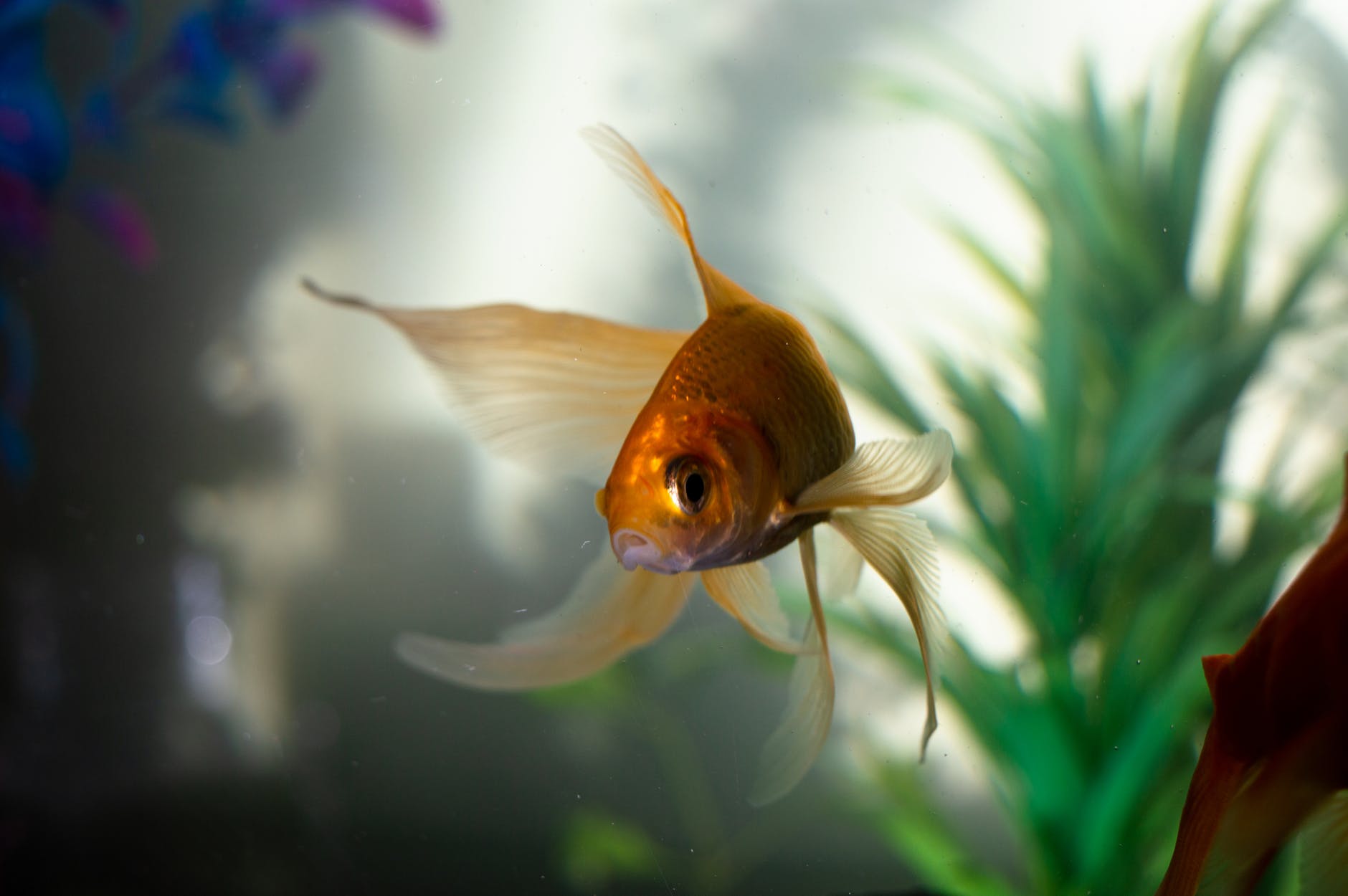
Two top tropical tank fish are described here; Scientific names preferred conditions, colors description, sex differences and breeding advice are given for the Marbled Headstander and the Neon Tetra.
Abramiteshypselonotus
Marbled headstand – Abramiteshypselonotus (Family: Anostomidae)
An unusual feature of this fish that becomes obvious immediately is its position in the water. It swims with its head downwards. It is not a common tropical tank fish but is alright in a community tank as long you assess the sizes of all the fish you propose to have. This is because the headstands can grow up to 12 cms and as they become bigger they become more confrontational with smaller fish.
The water temperature should be at least 24 degrees centigrade because cold water will adversely affect their health but they are pretty resilient to poorer water quality. A thickly planted aquarium with hiding places is also required.
Food-wise they are not fussy but will need a fair percentage of vegetable matter. Despite its head position, it does not get food from the bottom of the tank.
Compared to its body the marbled headstand has a small head which is somewhat pointed. The main body color ranges from a reddish-brown to yellow. It has several vertical irregulars shaped gray to brown stripes on its sides. The tail fin is noticeable due to a white crescent and its back is arched.
There appears to be no authenticated information on how to breed this fish although there are claims that it has, in rare instances, been bred in an aquarium. Without any specific information, you would have to assume that they should be treated as any egg-laying (oviparous) species should be.
Other names for this fish are the ‘Striped headstand’, the ‘High-backed headstand’ and ‘Norman’s headstand’. It has previously been classified as Abramites microcephalus.
Paracheirodoninnesi
Neon Tetra – Paracheirodoninnesi (Family: Characidae)
There are other tetras but their coloring is not as vivid as the neon. Other well-liked species are the dwarf tetra (Hyphessobryconminimus), the dawn tetra (Hyphessobryconeos) and the flame tetra (Hyphessobryconflammeus).
I give the scientific names here because the neon tetra is also known as the Cheirodon or Hyphessobryconinnesi and shows that the popular name of tetra is not restricted to the Hyphessobrycon species.
It only grows to about 3 cms so be careful about the size of the other community occupants you have and if possible have them in a shoal of at least half a dozen. It is a sturdy and peaceful fish and is probably only second in popularity to the cardinal tetra.
The neon tetra will like a water temperature between 20 and 25 degrees centigrade. A variety of food is suitable; fine dry food, smallish live food and freeze-dried will give you this range. Telling the differences between the sexes is difficult. The female is a little bit bigger than the male – not easy.
The neon tetra is a slender fish and has a smallmouth. There are several aspects of the neon that makes it stand out from the crowd; a bright red patch of red covering the area from the caudal peduncle to the bottom of the pelvic fin and a green and blue stripe that goes from the snout via the eye to the adipose fin.
Breeding the neon tetra will not be easy for the beginner. But you could try the following which has proved to work in the past;
* set up a breeding tank with no gravel and clear water (slightly hard)
* use a young compatible pair for breeding
* up to 200 eggs will be laid after morning spawning takes place
* take both fish out of the tank straight after the egg-laying
* darken the tank after the fish are removed
* about 5 days later let some light into the tank and you will see some fry
* let additional light into the tank on a gradual basis
* Several times a day feed the fry with very small live food
* vigourously keep the tank free of uneaten food and debris